
Cinnamon Roll Focaccia (Vegan!)
The classic chewy, crispy edged focaccia is getting a cinnamon roll makeover. This focaccia loaded inside and out with a cinnamon‑sugar paste, then finished with a sweet vanilla glaze. That airy, chewy focaccia crumb is basically made to soak up all that gooey cinnamon goodness.
Servings: 12
Calories: 282kcal
Equipment
- Large bowl , oiled
- Plastic kitchen wrap or a damp kitchen towel
- Cooking thermometer (to measure water temperature)
Ingredients
For the dough:
- 3 ¾ cups all-purpose flour
- 1 ⅓ cup warm water (105-115F)
- 2 ¼ teaspoon instant yeast
- 2 tablespoons olive oil
- 1 ½ teaspoon coarse salt
For the cinnamon topping:
- 2 tablespoons olive oil for the baking pan
- 3 tablespoons coconut oil
- ½ cup light brown sugar
- 4 teaspoons cinnamon
For the icing:
- ¾ cup powdered sugar
- 1 ½-2 tablespoons oat milk
- ½ teaspoon vanilla extract
Instructions
- Place the flour in a large bowl. Make a well in the center and add warm water. Sprinkle the yeast over the water. Stir slowly (you can use a fork or a dough whisk) incorporating the flour into the water until a shaggy mass forms.
- Stir in the olive oil and salt. Mix in until a sticky dough forms.
- Turn out on a very lightly floured surface. The dough is very sticky: instead of kneading, use a pull and fold method until it is mostly sticking to itself instead of your hands, 5-7 minutes. Try not to add extra flour unless after 7 minutes it is still only sticking to your hands.
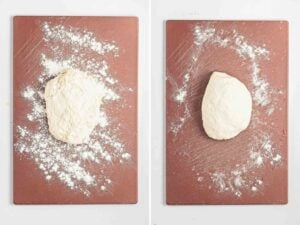
- Place in an oiled bowl and cover with plastic wrap or a damp towel. Allow to rise until a little over doubled (60-90 minutes depending on the room temperature).
- While the dough is rising, prep the toppings. Combine the brown sugar and cinnamon in a small bowl. Reserve 2 tablespoons (set it aside).
- Add melted coconut oil to the remaining sugar mixture (the bigger portion). Stir until it forms a paste.
- Add 2 tablespoons olive oil to a 9x13 inch pan. Spread the oil evenly and place the dough in. Stretch out with your fingers to the corners.
- Spread half the cinnamon sugar paste on the dough. Fold the dough in half and stretch to the edges of the pan again.
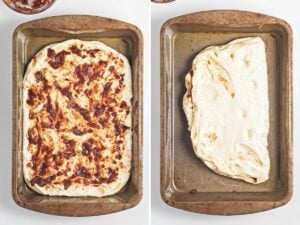
- Spread on the remaining cinnamon sugar paste.
- Cover again and allow to rise until 1.5x the size (30-60 minutes). While rising, heat the oven to 425°F.
- Using oiled fingers, push lots of dimples into the dough. Sprinkle on the reserved 2 tablespoons of cinnamon sugar.
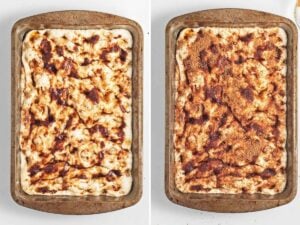
- Bake for 20-22 minutes until golden brown and very firm. Allow to cool in the pan for 10 minutes.
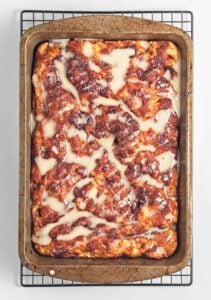
- Combine the powdered sugar, vanilla, and oat milk until a smooth pourable icing forms. Pour icing over focaccia and allow to cool for at least another 20 minutes before cutting and serving. Cooling completely before serving will keep the interior of the focaccia moist. Cutting while hot allows the steam and moisture to escape.
Notes
- Read through the recipe first and make sure you understand it. The blog post itself has helpful pictures for every step.
- Yeast will die if the water temperature is too high, and will not activate if the temperature is too low.
- Rising time will vary depending on room temperature and humidity. High temperatures lead to faster rising, but can also result in over-proofing (too much air which will result in less spring in the oven). Low temperatures are good for slow rises but can take up to 4 or more hours (or overnight in the fridge, bring to room temperature before moving on to next steps).
Do NOT cut into the bread while it is still steaming hot! No matter how tempting it is! Just wait a full 30 minutes after baking. Cutting into it early will result in the steam and moisture escaping. - This bread is best enjoyed the same day it is baked, but can be stored in an airtight container in the fridge for up to 3 days.
Nutrition
Calories: 282kcal | Carbohydrates: 48g | Protein: 5g | Fat: 8g | Saturated Fat: 4g | Polyunsaturated Fat: 1g | Monounsaturated Fat: 3g | Sodium: 296mg | Potassium: 79mg | Fiber: 2g | Sugar: 16g | Vitamin A: 5IU | Vitamin C: 0.03mg | Calcium: 23mg | Iron: 2mg